
Retinal Vascular Occlusions
Retinal vascular occlusions can happen to anyone at any time. Our retinal specialists have the expertise to diagnose them and create a treatment plan.
What is a retinal vascular occlusion?
The retina, at the back of the eye, turns the light that lands on it into information the brain processes to form an image. Veins and arteries in the retina circulate blood and bring nutrients and oxygen to retinal cells. Like other vessels in the body, they can become blocked, and when they do, the affected part of the retina cannot properly detect light, which affects your vision.
There are two main types. A retinal artery occlusion is a blockage in the artery carrying blood from the heart to the eye. A retinal vein occlusion is a blockage in a vein carrying blood back to the heart: a central retinal vein occlusion (CRVO) blocks the main retinal vein, while a branch retinal vein occlusion (BRVO) blocks one of its smaller branches.
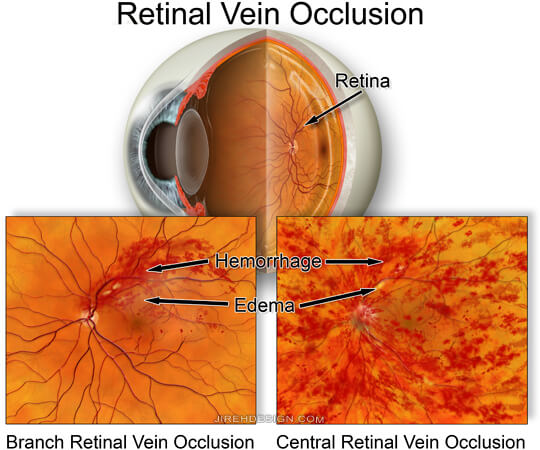
Who is at risk?
Although anyone can experience a retinal vascular occlusion, certain factors raise your risk:
- Diabetes
- High blood pressure
- High cholesterol
- Smoking
- Rare blood disorders
- Being over the age of sixty
If any of these apply to you, discuss them with your eye doctor so your eyes can be monitored for related changes.
Symptoms
The main symptom is a change in vision, often sudden, and either short-term or permanent. Occlusions can cause partial or complete vision loss and usually affect one eye at a time. If you notice any change in your vision, schedule an appointment right away. Seek emergency care immediately if you experience sudden loss of vision in one eye.
Treatment
There is currently no specific treatment for retinal artery occlusions, and vision loss from them is often permanent.
For retinal vein occlusions, your eye doctor may recommend injection treatments, either anti-VEGF medications or corticosteroids, to control swelling in the retina. These treatments often work well to control swelling but are not a cure, so regular return visits for injections are usually needed to keep the condition adequately controlled.
Videos: understanding your condition and treatment
Patient-education videos from the American Academy of Ophthalmology. Captions are available with the CC button.
Request an appointment
Are you experiencing symptoms of retinal vascular occlusion? Schedule an appointment so our specialists can diagnose and treat it.